1. Who decided on "replacing by a fixed service life"?
In the past it made sense, equipment management was often rudimentary, and reliable inspection methods were unavailable. The problem is that the rate at which a wire rope wears out depends heavily on its specific operating environment. The lifespan of the exact same rope can vary by as much as 100% depending on whether it’s used in a damp, water-seeping mine shaft or a dry, clean workshop. Furthermore, under current national standards, the decision to replace a rope should be based on its technical condition, not the duration of its use.
2. When must a rope be replaced? Look for these warning signs:
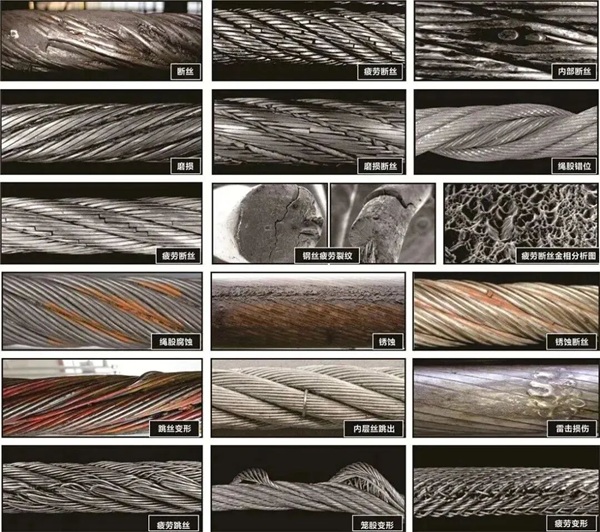
1. Excessive broken wires
l Broken wires in the "strand valleys" (where strands make contact with one another): If 2 or more broken wires appear within a length of 6d (where 'd' is the nominal diameter of the rope), the rope should be scrapped.
l Concentrated broken wires: If broken wires are clustered within one or two adjacent strands—creating a localized dense patch—the rope should be considered for discard, even if the total number of broken wires hasn't exceeded the formal limit.
2. Reduction in Diameter
l Rotation-resistant wire ropes must be scrapped if the diameter decreases by 5%; ropes with a fiber core can withstand a reduction of up to 10%.
l If a significant localized reduction in diameter is observed (such as an indentation caused by damage to the rope core or the central zone), the rope must be scrapped immediately.
3. Wear of Outer Wires
l Loss of metallic cross-sectional area: The rope must be scrapped if the loss exceeds 6% over a length of 6d (six times the nominal diameter) or 10% over a length of 30d.
4. Fracture of an Entire Strand
l The complete fracture of any single strand warrants immediate discard.
5. Severe Deformation
l Kinking, severe bending, "bird-caging" (cage-like distortion), protrusion or twisting of strands, extrusion of individual wires, localized flattening, or exposure of the rope core—all are grounds for immediate discard.
6. Excessive Corrosion
l External: Severe pitting, loose wires, or gaps between strands—replace the rope.
l Internal: Rust powder seeping out from between the strands—replace the rope.
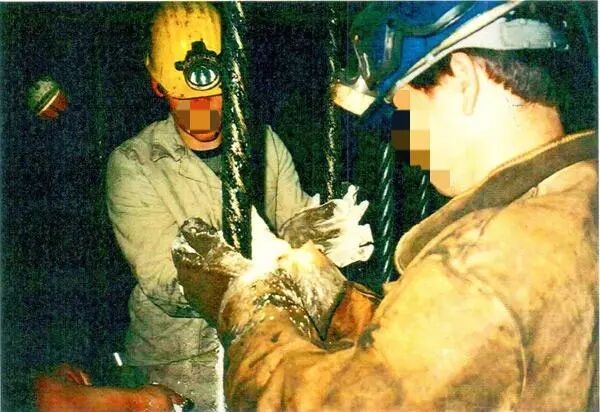
Among these six criteria, wire breaks and changes in diameter can be roughly estimated using a tape measure or a magnifying glass; however, the depth of corrosion, internal fatigue, and the condition of the rope core cannot be accurately assessed by the naked eye.
3. How to solve this problem?